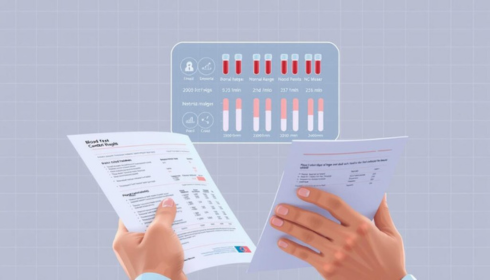
Blood test reports can look intimidating with all their abbreviations and numbers. Understanding a few basics helps you discuss them more confidently with your doctor.
A CBC (Complete Blood Count) usually checks red blood cells, white blood cells and platelets. It can give clues about anaemia, infections and some other conditions. The haemoglobin value, for example, relates to oxygen-carrying capacity; low levels often cause fatigue and weakness.
A lipid profile typically measures cholesterol and triglycerides. Total cholesterol, LDL (“bad”), HDL (“good”) and triglycerides together help assess heart risk. High LDL and triglycerides, and low HDL, are generally not desirable, but your doctor will interpret them in context.
Most reports show reference ranges next to each value. Being slightly above or below doesn’t always mean something serious; trends over time and your overall health matter more than a single number.
Instead of trying to self-diagnose from reports, use them as a conversation tool. Ask your doctor which values they are most concerned about, what affects them, and what practical steps you can take to improve them.