When was the last time your child had a complete dental examination? Many parents think of dental appointments as a quick cleaning, a few questions about brushing, and perhaps a new toothbrush to take home. Today’s pediatric dental exams can offer much more.
Advances in dental technology, individualized cavity-risk assessments, and preventive care have changed how dental professionals monitor children’s oral health. Instead of focusing only on finding cavities, pediatric dentists evaluate how teeth develop, identify early warning signs, and help families prevent problems before they require extensive treatment.
For parents in Rancho Cucamonga, understanding what happens during a modern children’s dental exam can make scheduling appointments easier and help them feel more confident about their child’s care.
Why Are Regular Dental Exams Important for Children?
Children’s mouths change rapidly. Baby teeth emerge, jaws grow, permanent teeth begin developing, and oral hygiene habits evolve as children become more independent.
These changes make regular pediatric dental examinations especially valuable.
A pediatric dentist evaluates more than the visible surfaces of teeth. During a comprehensive examination, the dentist may assess gum health, tooth eruption, bite development, soft tissues, and signs of dental disease.
Routine visits also create opportunities to discuss nutrition, brushing habits, fluoride exposure, and other factors that influence oral health.
Children can develop cavities without experiencing pain. A dental exam may identify early enamel changes before tooth decay progresses into a larger problem.
Preventive appointments also help children become familiar with the dental environment and develop positive oral healthcare routines.
What Happens During a Pediatric Dental Exam?
Parents sometimes wonder exactly what their child will experience during an appointment.
Although procedures vary based on age and individual needs, a typical pediatric dental checkup includes several important steps.
Reviewing Your Child’s Dental and Medical History
The dental team begins by reviewing your child’s health history.
Parents may answer questions about medications, allergies, previous dental treatment, and changes in their child’s health.
The dentist may also ask about brushing routines, dietary habits, tooth sensitivity, and any recent dental discomfort.
These details help guide the examination and identify factors that may influence treatment decisions.
Examining the Teeth and Gums
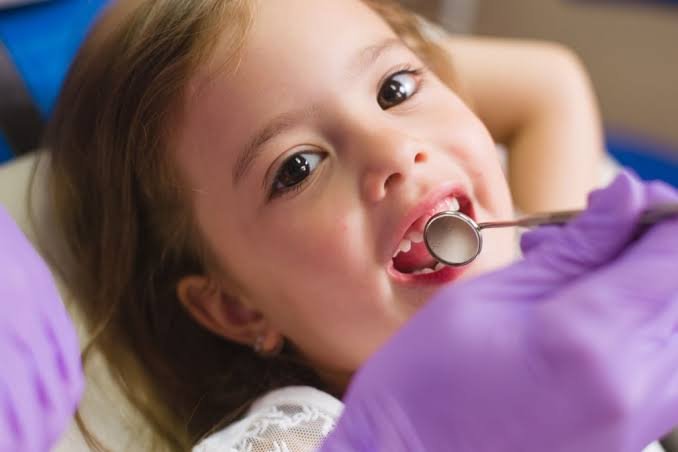
Next, the pediatric dentist carefully examines the teeth and surrounding tissues.
The dentist looks for cavities, plaque buildup, enamel changes, gum inflammation, and other signs of oral health concerns.
The examination may also include checking the tongue, cheeks, palate, and other soft tissues.
For younger children, dentists adapt the examination to their developmental stage and ability to cooperate.
Evaluating Dental Growth
One important advantage of pediatric dental exams is the opportunity to monitor development.
The dentist checks whether baby teeth and permanent teeth are emerging as expected.
They may also evaluate spacing, bite relationships, and other developmental patterns.
Identifying unusual changes early allows families to understand whether additional monitoring or specialist evaluation is appropriate.
How Digital Dental X-Rays Improve Children’s Dental Exams
Digital dental radiography is an established technology that continues to play an important role in pediatric dentistry.
Digital X-rays allow dentists to examine areas that may not be visible during a standard clinical examination.
For example, X-rays can help identify cavities between teeth, evaluate developing permanent teeth, and assess certain injuries or infections.
Modern digital imaging systems can use lower radiation doses than older conventional film systems, depending on the equipment and technique.
However, pediatric dentists do not need to take X-rays at every appointment.
The decision depends on the child’s age, dental history, cavity risk, clinical findings, and whether the images are necessary for diagnosis.
Parents can ask their children’s dentist in Rancho Cucamonga why specific images are recommended and how the practice minimizes radiation exposure.
What Is a Cavity Risk Assessment?
One increasingly emphasized aspect of preventive pediatric dentistry is individualized cavity-risk assessment.
Rather than assuming every child has the same likelihood of developing tooth decay, dentists evaluate specific risk factors.
These may include:
- Previous cavities or dental restorations.
- Frequency of sugary snacks and drinks.
- Brushing and flossing habits.
- Exposure to fluoride.
- Visible plaque accumulation.
- Certain medical conditions or medications.
- Changes in the appearance of tooth enamel.
A child with a history of frequent cavities may need a different preventive plan than a child who has never experienced tooth decay.
The dentist uses this information to recommend appropriate preventive services and determine how frequently the child should return for examinations.
This personalized approach helps families focus on the factors most relevant to their child’s oral health.
Can Pediatric Dentists Detect Cavities Before They Become Visible?
Early identification of tooth decay is an important goal of modern dental examinations.
Cavities do not always begin as obvious holes in teeth.
Early enamel demineralization may appear as subtle white spots or changes in tooth structure.
Pediatric dentists use clinical examinations, appropriate radiographs, and, in some practices, additional diagnostic technologies to evaluate suspicious areas.
Certain dental offices may use fluorescence-based devices or other tools to support cavity detection.
These technologies supplement professional clinical judgment rather than replacing a comprehensive dental examination.
When dentists identify early noncavitated lesions, they may recommend preventive approaches such as fluoride treatment, improved oral hygiene, and dietary changes.
Early detection can sometimes help families avoid more invasive dental procedures.
Does Every Pediatric Dental Exam Include a Cleaning?
Dental examinations and professional cleanings often occur during the same appointment, but they serve different purposes.
A dental examination evaluates oral health and identifies potential problems.
A professional cleaning removes plaque and deposits that may accumulate on tooth surfaces.
During a children’s dental cleaning, a dental hygienist or dentist may gently polish the teeth and provide brushing or flossing guidance.
The dental team may also recommend a fluoride treatment based on the child’s cavity risk.
For infants and very young children, the appointment may focus more heavily on examination, parent education, and preventive counseling.
A pediatric dental practice tailors these services to the child’s age and needs.
How Often Should Children Have Dental Exams?
Many children attend dental checkups approximately every six months.
However, a six-month schedule is not appropriate for every child.
Some children have a higher risk of cavities, gum inflammation, or other dental concerns and may benefit from more frequent appointments.
Others may follow a different schedule based on their oral health history.
The American Academy of Pediatric Dentistry recommends establishing a dental home when the first tooth erupts and no later than 12 months of age.
After the initial visit, the dentist can recommend an individualized examination schedule.
Regular visits help maintain continuity of care and provide opportunities to monitor changes as children grow.
How Parents Can Prepare Children for a Dental Exam
A successful dental appointment often begins before the family arrives at the office.
Parents can help children feel prepared by explaining what happens during a dental checkup using simple, positive language.
For younger children, pretend dental examinations at home can make the experience more familiar.
You might practice opening wide, counting teeth, or sitting still while someone looks inside the mouth.
Avoid promising that a visit will never involve discomfort, since the dentist may need to evaluate sensitive areas.
Instead, explain that the dental team will check their teeth and help keep their smile healthy.
Parents should also bring information about medications, previous dental treatment, and any concerns they want to discuss.
Scheduling appointments when children are well-rested can help improve cooperation.
Questions Parents Should Ask During a Children’s Dental Checkup
A pediatric dental exam is also an opportunity for parents to receive practical guidance.
Consider asking the dentist:
- Is my child’s tooth development progressing normally?
- Are there any early signs of cavities?
- Does my child need dental X-rays at this visit?
- Are we using the right amount of fluoride toothpaste?
- How can we improve brushing and flossing at home?
- Does my child need additional preventive treatment?
- When should we schedule the next examination?
These conversations help parents understand the findings and participate in their child’s dental care.
Finding Pediatric Dental Exams in Rancho Cucamonga, CA
Families looking for pediatric dental exams in Rancho Cucamonga should consider a practice that prioritizes prevention, clear communication, and age-appropriate care.
A comprehensive examination should address each child’s current oral health while considering their ongoing dental development.
Parents may also want to ask about digital imaging, preventive services, cavity-risk assessments, and how the dental team works with younger patients.
Families throughout Rancho Cucamonga, Alta Loma, Etiwanda, Victoria Gardens, and neighboring communities can benefit from consistent pediatric dental care.
Establishing a relationship with a pediatric dentist makes it easier to monitor changes, discuss concerns, and develop an appropriate preventive plan.
Schedule Your Child’s Next Pediatric Dental Exam
A modern pediatric dental exam is about more than checking for cavities.
It provides an opportunity to evaluate dental development, identify early signs of oral health problems, and create a personalized prevention strategy.
Digital imaging when appropriate, individualized cavity-risk assessments, and regular professional examinations help pediatric dentists make informed recommendations for growing smiles.
If your child is due for a dental checkup, consider scheduling a pediatric dental exam in Rancho Cucamonga, CA.
A proactive approach to children’s dental health can help reduce preventable problems and establish healthy habits that last well beyond childhood.